Detecting fraudulent transactions is one of the most important real-world uses of machine learning, and building a fraud detector is a powerful project with Python. It teaches classification on challenging, imbalanced data.
This guide, titled “Credit Card Fraud Detection,” walks you step by step through building a model that flags suspicious transactions among many normal ones.


Overview of The Document
The Credit Card Fraud Detection guide is an intermediate-level tutorial that takes you from an empty file to a working fraud classifier. It is written in clear, plain English and organized into eight focused steps.
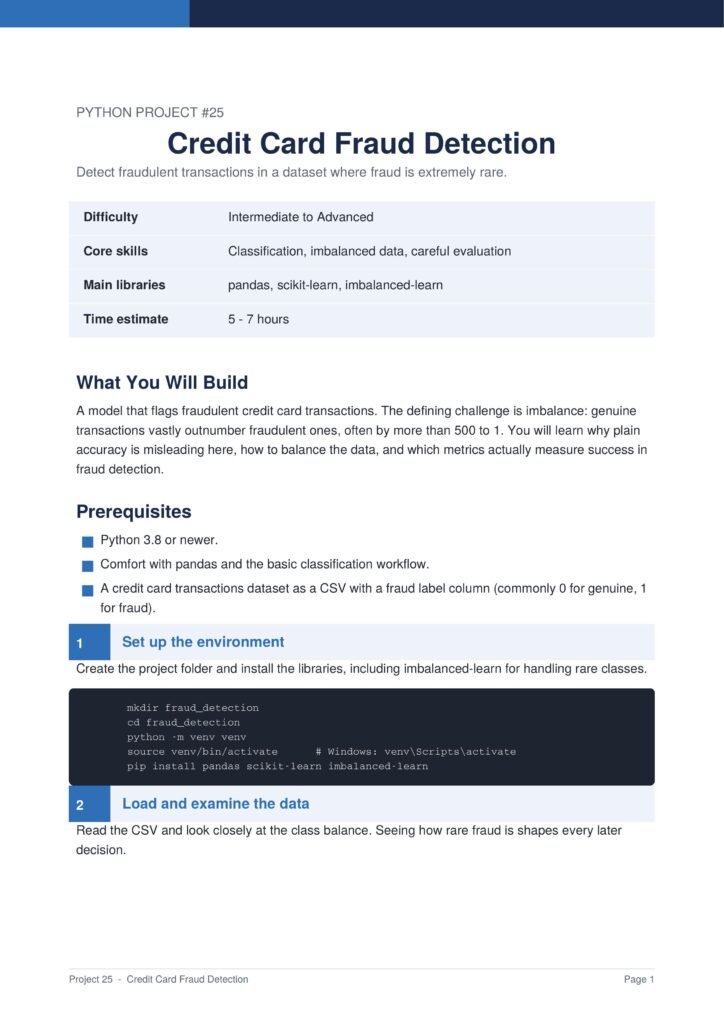
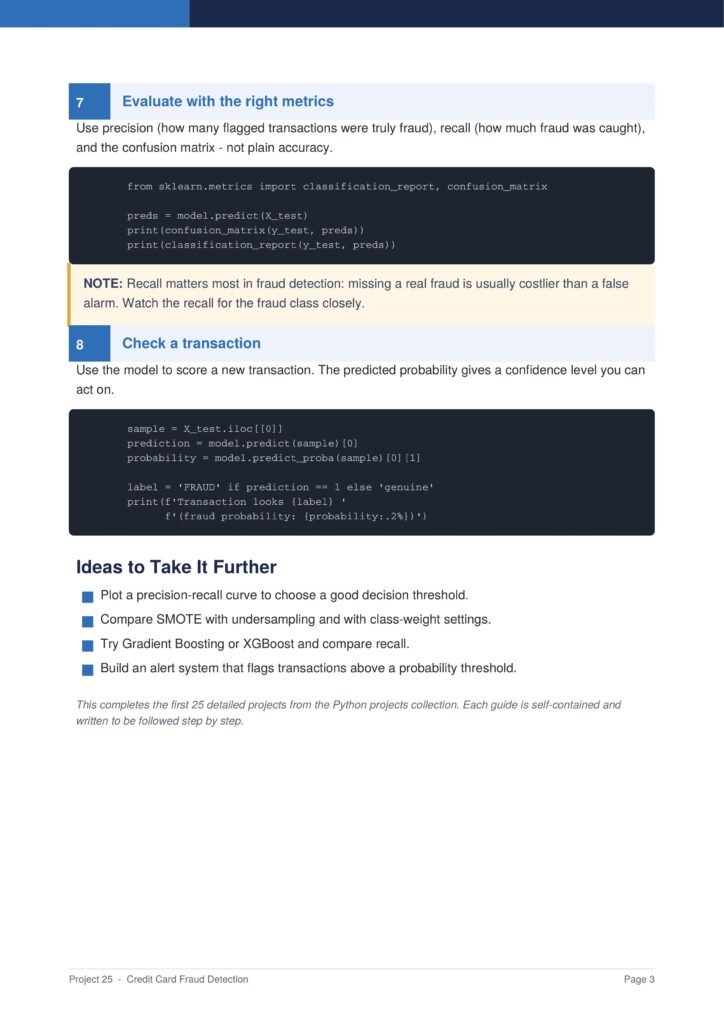
The guide focuses on the challenge of imbalanced data, where fraud is very rare compared to normal transactions.
The Content Of The Document
a. Loading the Transaction Data
The guide begins by loading a transaction dataset and discovering how few of the records are actually fraud.
b. Understanding Imbalanced Data
You learn why imbalanced data is tricky and why plain accuracy can be misleading for this kind of problem.
c. Preparing and Splitting the Data
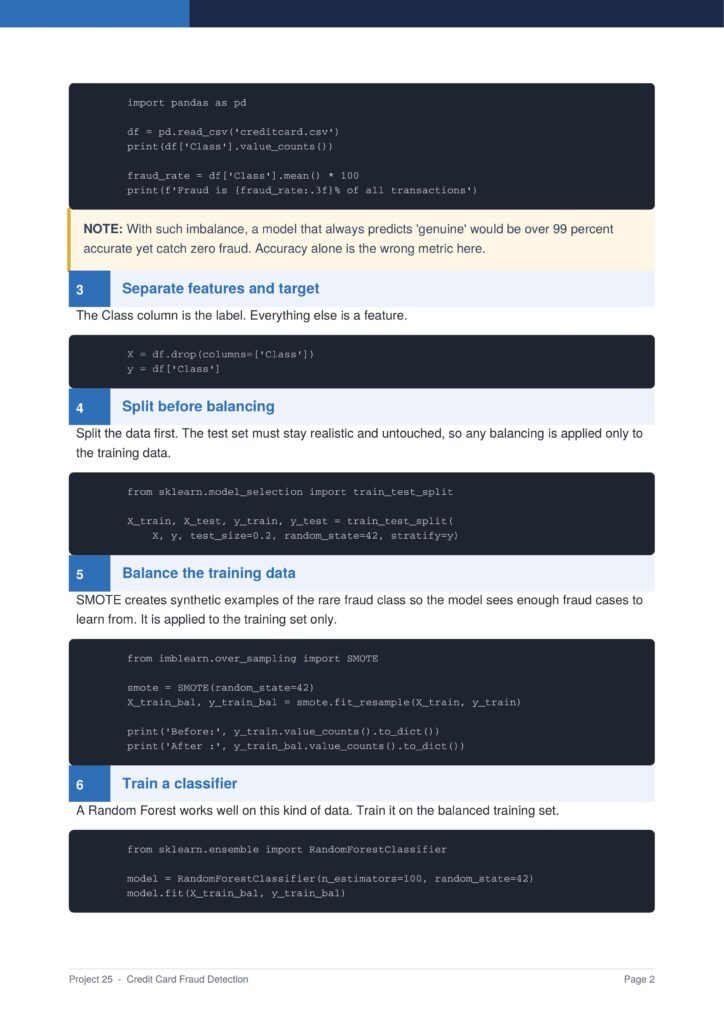
The document shows how to scale the features and split the data while keeping the rare fraud cases represented.
d. Training the Model
You learn how to train a classifier and adjust it so it pays proper attention to the rare fraud examples.
e. Evaluating with the Right Metrics
The guide shows how to evaluate the model with precision, recall, and a confusion matrix instead of accuracy alone.
Why This Document
a. Teaches a Real Challenge
This document is valuable because it teaches how to handle imbalanced data, a genuine challenge in real machine learning.
b. Teaches the Right Metrics
The guide shows why precision and recall matter, an essential lesson for evaluating models honestly.
c. A High-Impact Project
Fraud detection is a high-impact application that makes an impressive and meaningful portfolio project.
Conclusion
The “Credit Card Fraud Detection” project is a high-impact introduction to classification on imbalanced data. By following the guide, you learn how to load transaction data, understand imbalance, prepare and split it, train a model, and evaluate it with the right metrics. The result is a meaningful, real-world machine learning project. If you want a project that teaches genuine professional skills, this clear step-by-step guide is an excellent choice.
Download From The Below Link
To start building your own credit card fraud detection project today, you can download the Credit Card Fraud Detection PDF guide and follow every step at your own pace. Happy coding!