Analyzing the mood of social media posts is one of the most popular applications of machine learning, and a tweet sentiment analyzer is a great way to learn it with Python. It teaches the full natural language processing workflow.
This guide, titled “Twitter Sentiment Analysis using ML,” walks you step by step through building a model that classifies tweets as positive or negative.


Overview of The Document
The Twitter Sentiment Analysis using ML guide is an intermediate-level tutorial that takes you from an empty file to a working tweet classifier. It is written in clear, plain English and organized into eight focused steps.
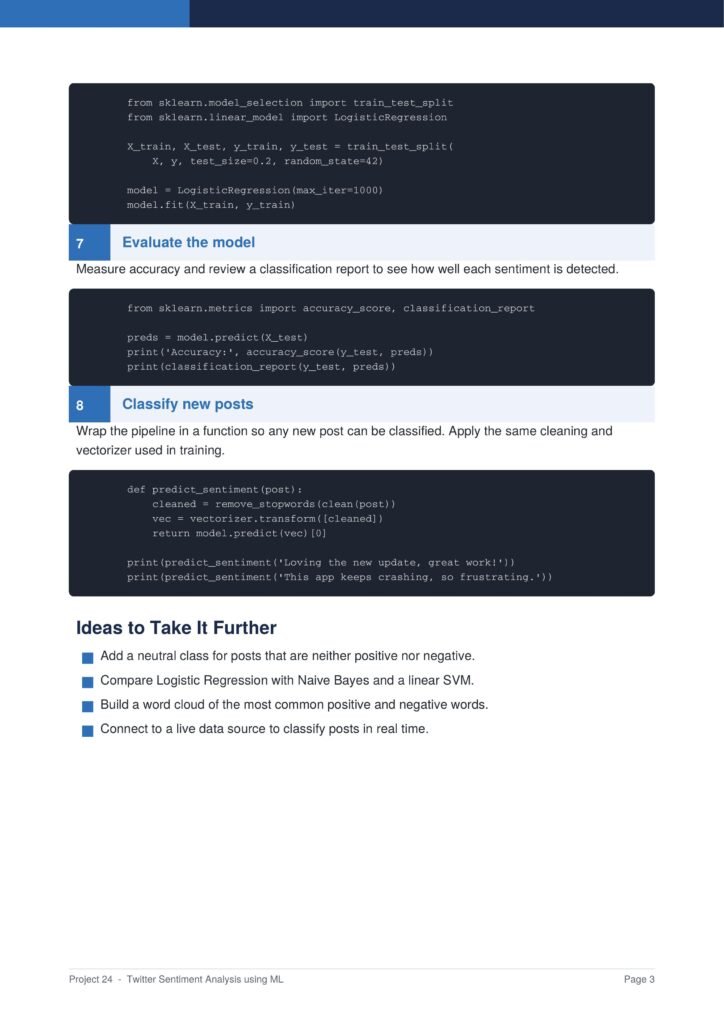
The guide focuses on the messy reality of social media text and how to clean it before training a model.
The Content Of The Document
a. Loading the Tweet Dataset
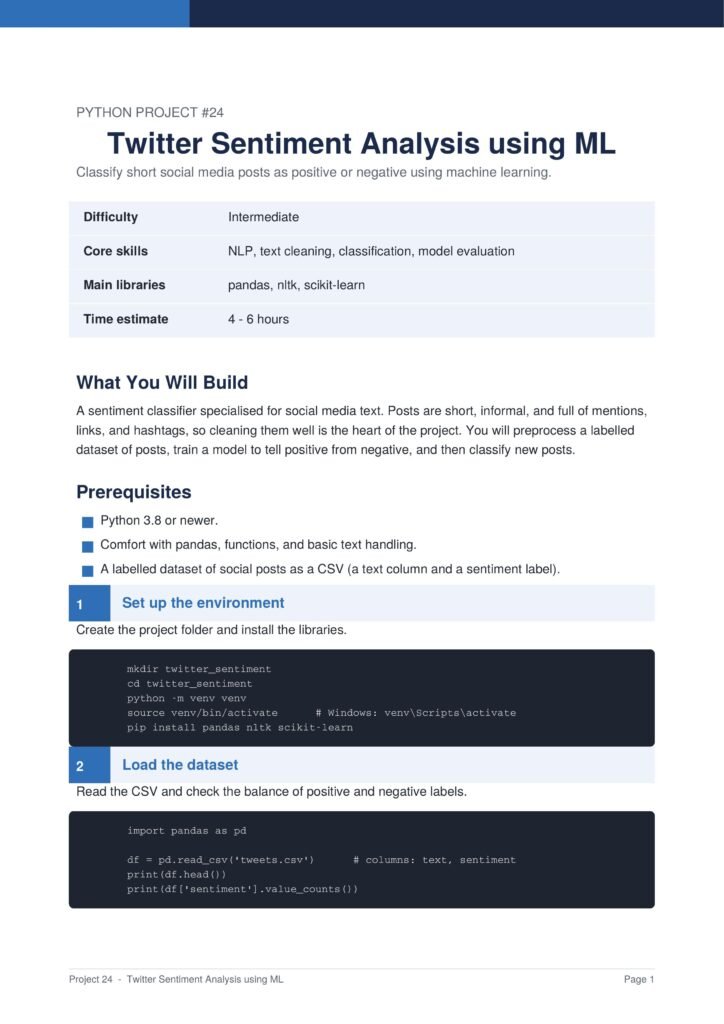
The guide begins by loading a dataset of labelled tweets and exploring the balance between positive and negative examples.
b. Cleaning the Tweet Text
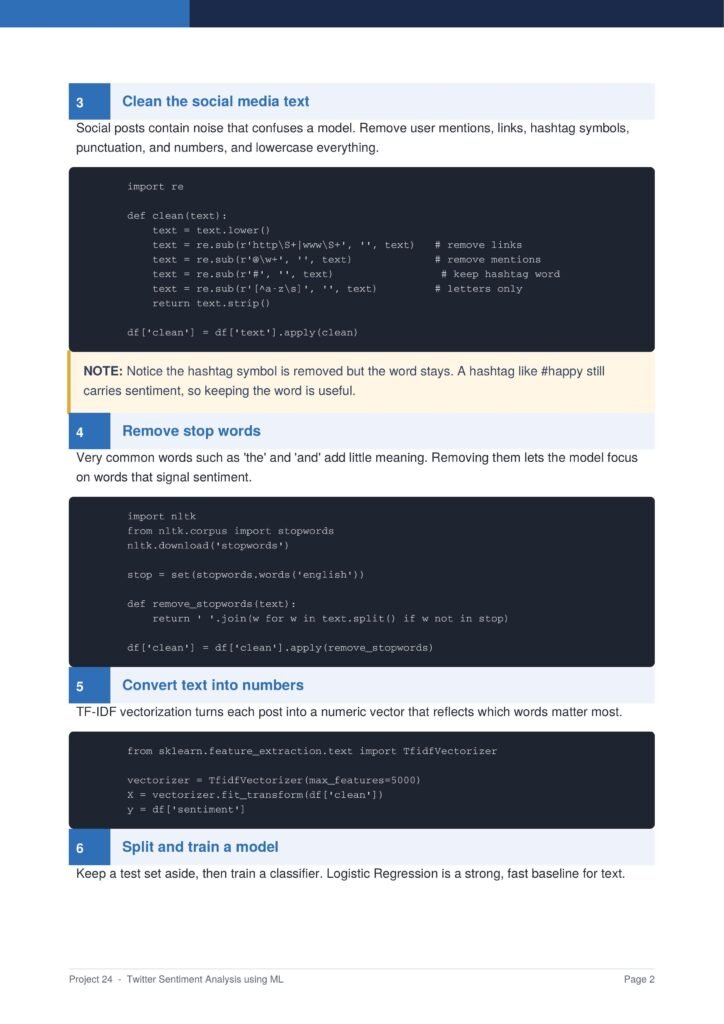
You learn how to remove links, mentions, hashtags, and symbols so only the meaningful words remain.
c. Converting Text to Numbers
The document shows how to use TF-IDF vectorization to turn the cleaned tweets into numbers a model can learn from.
d. Training the Classifier
You learn how to split the data and train a classifier that learns to separate positive tweets from negative ones.
e. Evaluating and Predicting
The guide shows how to measure accuracy and predict the sentiment of a brand-new tweet.
Why This Document
a. Real-World Text Data
This document is valuable because it works with real, messy social media text, teaching skills that apply to many NLP tasks.
b. Teaches Thorough Cleaning
The guide teaches thorough text cleaning, the step that often makes the biggest difference in a language model.
c. A Popular, Relevant Project
Sentiment analysis is a popular and relevant project that demonstrates practical machine learning to any employer.
Conclusion
The “Twitter Sentiment Analysis using ML” project is a popular and practical introduction to natural language processing. By following the guide, you learn how to load tweets, clean text, convert it to numbers, train a classifier, and make predictions. The result is a working model that reads the mood of social media. If you want a relevant machine learning project, this clear step-by-step guide is an excellent choice.
Download From The Below Link
To start building your own twitter sentiment analysis project today, you can download the Twitter Sentiment Analysis using ML PDF guide and follow every step at your own pace. Happy coding!